My father had an orchard on the outskirts of Tehran. A mile off a dirt road, its own well, its own generator that you started with a hand crank, and far enough from everything that when you were there, you were genuinely there, no city noise, no neighbors, just fruit trees and the particular silence of somewhere that does not need you. I loved it completely.
The property had a pebble pathway, about fifteen feet wide and sixty feet long, running from the front gate to the house, with fruit trees on both sides. Mulberry, cherry, apple, pear, peach, nectarine, and my favorite, apricot. The house itself was a modest two bedroom place that was nothing special and absolutely everything to a kid who was allowed to run around in it unsupervised. Khairallah, who helped look after the trees, would ride over from his nearby village on his donkey when needed. At the time this seemed entirely normal. In retrospect it was one of the better details of my childhood, though I did not fully appreciate it until the donkey tried to kill me.
The pathway though. That was not just a pathway.
There were two sheep, a rooster, several hens, and a German Shepherd who had made a clear and final decision about my father, which was that he was acceptable, and about everyone else, which was that they were not. He did not bite. He just barked, continuously and with great personal investment, at anyone who came near him. Every day. Without exception. You had to admire the commitment, even if you did not enjoy the noise.
The ram operated differently. He would spot you from the far end of the pathway and you could actually see the decision forming. Not aggression, exactly. More like a man who has just remembered something he has been meaning to deal with, and is now going to deal with it. We all learned to walk that pathway with one eye on the ram at all times, which turned every trip to the front gate into something between an errand and a contact sport.
And then there was the rooster. I have thought about this rooster many times over the years and I still cannot tell you what he wanted. I do not think he knew either. He would simply launch himself at whoever was closest, claws extended, with the energy of someone who had a lot of feelings and had decided that your body was an appropriate place to put them. No warning. No pattern. Just the rooster, airborne, suddenly, because it was Tuesday or because you were wearing that color or because that is simply who he was.
At ten years old I had not yet read Joseph Campbell, but trying to get to the front gate without bleeding or a concussion had given me a working knowledge of the hero’s journey.
I had made a kind of peace with the dog, the ram, and the rooster. It was difficult, yes, but they were familiar. They had consistent positions. The dog barked, the ram rammed, the rooster attacked, and you could plan your day around this information.
The donkey had no position. The donkey had an agenda.
I should be honest about what I knew before I made my decision. I had watched this donkey remove my older cousins from its back on multiple occasions, efficiently and without drama, the way you might brush something off a table. I had watched it walk my sister under a low canopy of branches, deposit her hair comprehensively into the tree, and continue on its way without checking what it had left behind or showing any interest in going back for it.
I had seen all of this. I had filed it away. And then I thought: you know what, I’ll have a go. I might be the donkey whisperer. I am not the donkey whisperer.
I got on without incident. The donkey stood perfectly still, which I took as a good sign and which I now understand was the donkey letting me get comfortable. I nudged it gently with my leg. Nothing happened. I tried again. Still nothing. Third time, and the donkey left.
Not trotted. Not cantered. Left. One moment we were stationary, the next we were at full gallop, and the transition between these two states took approximately the same amount of time it takes to realize you have made a serious error of judgment.
I want you to picture this accurately. A ten year old boy in a tank top, shorts, and flip flops, on a donkey that had clearly been waiting for a reason to run and was now running it, somewhere on a dirt track outside Tehran in the afternoon heat. Within thirty seconds the flip flops were gone. Both of them. I have no idea where they went. The donkey did not care and frankly neither did I at that point because I had more pressing concerns.
I began to assess my options.
Option one was to jump off. The ground was dirt and rocks and I was now barefoot, so this was less a rescue plan and more a different kind of catastrophe.
Option two was to stay on and wait it out. The donkey did not appear to have a destination, only a direction, which was forward, and a speed, which was too fast, and no idea when either of these things might change.
Option three, in a moment of either bravery or complete panic, was to pull harder on the reins. So I pulled. Hard. Hard enough that the donkey’s head swung a full ninety degrees to the left, and suddenly his eye was about twelve inches from my face, looking directly at me.
It was not an angry look. It was not a friendly look. It was the look of an animal that has turned its head to confirm something it already suspected, has now confirmed it, and is going to continue regardless.
He continued for another five minutes. Then he stopped. Just like that, without warning, the way he had started.
I got off. I picked up the reins. The donkey, who sixty seconds ago had been galloping, now walked beside me at a perfectly pleasant pace, calm and cooperative, as if the last ten minutes had been a mutual decision we had both made and were now moving on from.
We walked together along the track for a while and then he started pulling me sideways, toward a house with iron gates. I went with him. At this point my relationship with the concept of personal agency was at a low point and I saw no reason to fight a donkey about it.
At the gate there was a female donkey. I stood there for a moment and thought about the galloping, and the flip flops, and the ninety degree head turn, and the five minutes of involuntary cross-country travel, and I understood that none of it had anything to do with me. I was not a rider. I was not an adversary. I was not even really a participant. I was simply something that had been on his back when he decided he had somewhere he needed to be, and he had gotten there, and now I was surplus to requirements.
I tied him to the gate. I walked the three quarters of a mile back to the orchard alone, barefoot, over rocks, in the afternoon heat, working through several different ways of framing what had just happened, none of which were particularly flattering.
When I got back, Khairallah was there. He looked at me. He looked at my feet. He looked back at me. And then he laughed for what felt like a very long time.
My family has been laughing about it for forty years. The donkey, as far as I know, felt nothing and remembers nothing and went on to live a full and satisfied life, most of the details of which are none of my business.
All the puns intended. That day the donkey made a complete ass out of me.
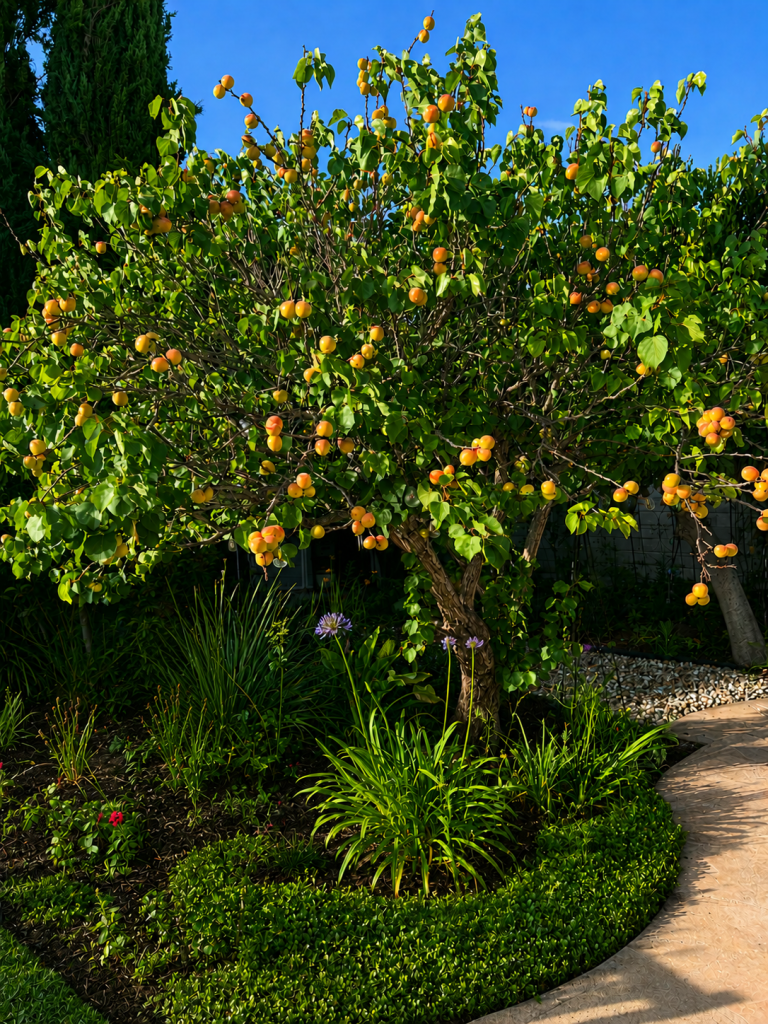
The apricots in this tart are from the tree in my backyard in California. When they come in I make this, partly because it is a genuinely good tart, and partly because apricots take me straight back to my father’s orchard and that long pebble pathway and the summer afternoons that felt like they would go on forever, in the way that childhood summers do before you understand that they will not.
I do not think about the donkey when I make it. Mostly. The apricots are better than anything you will find in a supermarket, smaller but sweet, and the frangipane underneath them is soft and rich and smells extraordinary while it bakes. My father would have liked the tart. No feedback was requested from the donkey.
Apricot Frangipane Tart
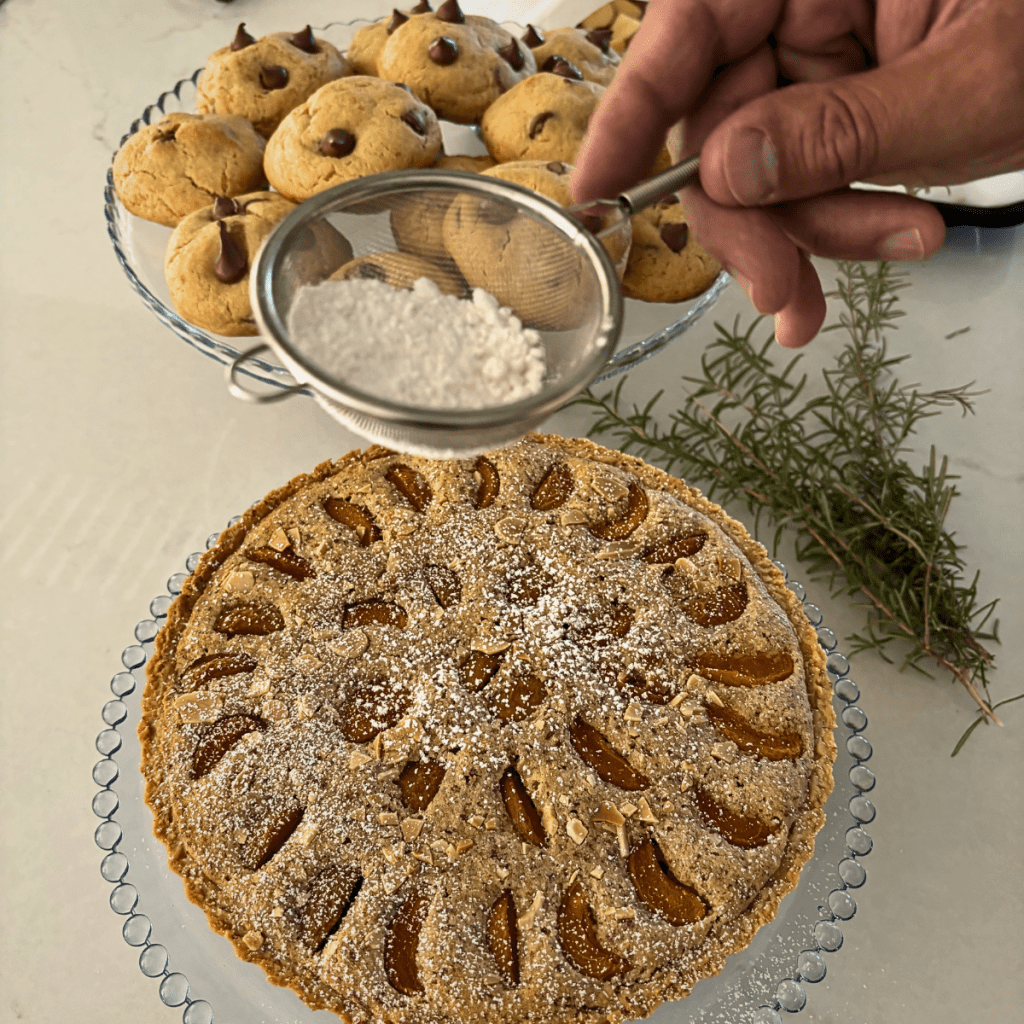
Three components, each needing proper attention. Start the day before if you can. At minimum give yourself five hours and do not rush the chilling time on the pastry, that is where most people go wrong.
Ingredients
- For the pastry:
- 100g unsalted butter, very soft
- 50g icing sugar, sifted
- 1 large egg, at room temperature
- 40g almond meal
- 200g plain flour
- A pinch of fine salt
- 150g unsalted butter, very soft
- 100g caster sugar
- 3 large eggs, at room temperature
- 150g almond meal
- 1 tsp vanilla paste, if you have it
- 6 small ripe apricots (about 300g)
- 20g slivered almonds
- 1 tbsp apricot jam, to glaze (optional)
For the almond cream:
For the top:
Directions
- Pastry:
- Beat the soft butter and icing sugar together until smooth, a couple of minutes in a stand mixer. Add the egg and almond meal and mix until combined, then add the flour and salt on low speed until a rough dough just comes together. Stop the moment it does, because overworked pastry shrinks in the tin and then you have a flat-edged tart and a lesson you only need to learn once.
- Rest the dough between two sheets of baking paper, rolled to about 4mm thick, in the fridge for at least an hour. Transfer to a 24cm tart tin with a removable bottom, press gently into the corners, trim the edges, and refrigerate for another hour or overnight if possible.
- When you are ready, preheat to 160°C or 325°F, dock the base all over with a fork, and bake straight from the fridge for 15 to 20 minutes until the bottom feels dry. Cool completely before the next step and mean it when you say completely.
- Beat the very soft butter and sugar for two to three minutes until pale. Whisk the eggs separately then add them slowly until smooth. If it curdles the butter was not soft enough, but adding the almond meal will usually pull it back together. Mix in the almond meal and vanilla paste until you have a thick paste, then spread it evenly into the cooled shell.
- Cut the apricots in half, remove the stones, and cut each half into three slices. Press them into the almond cream in two rings working from the outside in. Scatter the slivered almonds generously over the top. Bake at 160°C or 325°F for 40 to 50 minutes until the cream has puffed and turned a deep even gold. Cool on a rack.
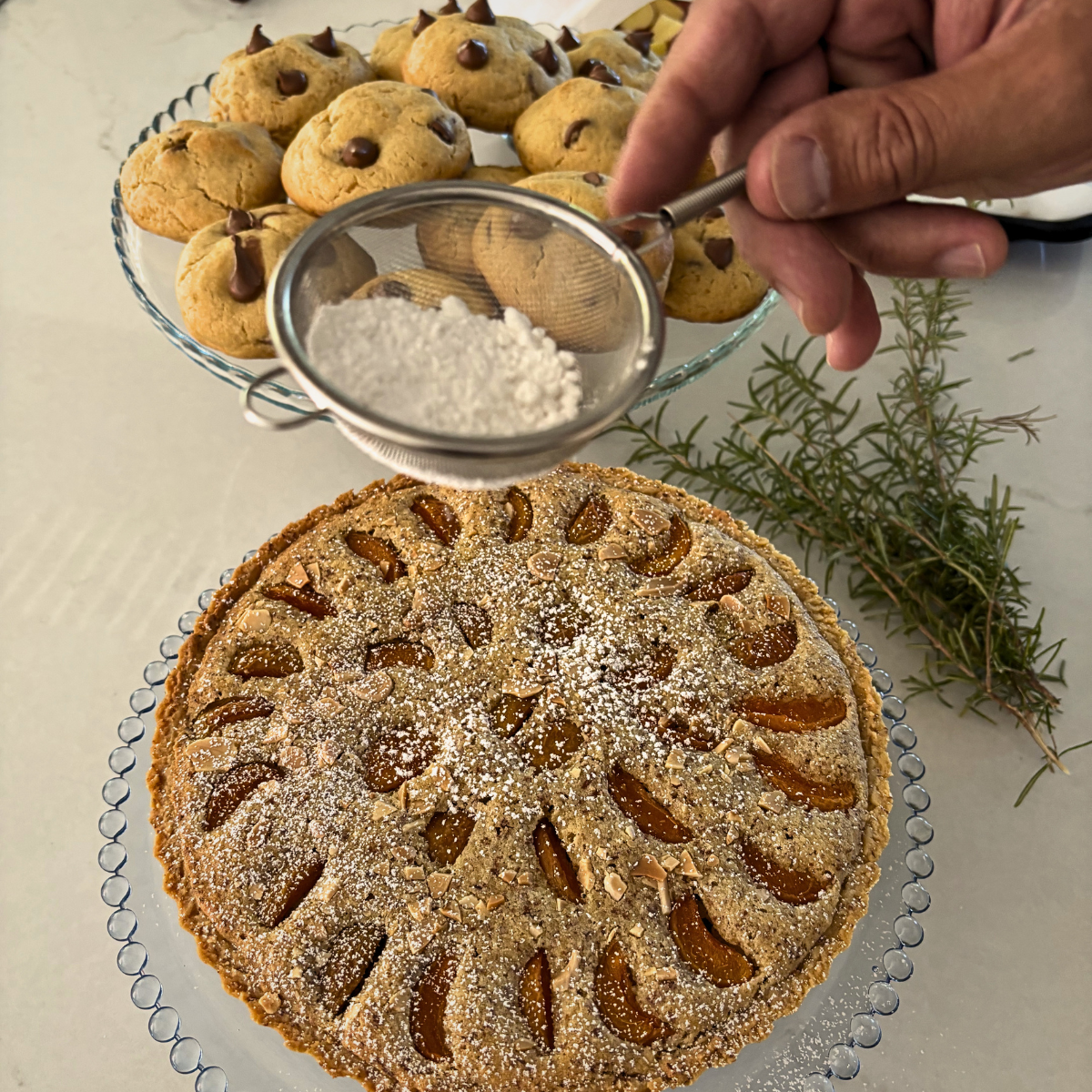
- Warm the apricot jam in the microwave for thirty seconds and brush it over while the tart is still slightly warm, or if you prefer, wait until it is fully cool and dust with powdered sugar instead. Either works. Serve at room temperature with crème fraîche alongside if you have it, which you should, because it is worth having.
Almond cream:
Assembly:


Leave a Reply