It is the summer of 1982 and I am ten years old, and for the next few weeks nothing else exists except the World Cup.
I should clarify what summer holidays meant in our neighborhood. They meant the streets belonged to us, entirely and without negotiation. From morning until the adults called us in, the kids of the neighborhood occupied the asphalt with a football and two makeshift goals, playing out whatever we had seen on television the night before with the absolute seriousness that children bring to things that matter. We were not really playing football. We were trying to be our favorite players, and that felt more important anyway.
That summer, I wanted to be someone from Brazil. I never saw the previous World Cup winning teams from Brazil, I was too young, but I need to talk about my Brazil team for a moment, because if you did not see them play in 1982 you may not fully understand what the rest of this article is about. This was not a football team in the conventional sense of the term. This was a collective act of aesthetic defiance, eleven men who had apparently agreed among themselves that winning was something that would happen as a consequence of playing beautifully, rather than the other way around. They moved with a rhythm that did not belong on a football pitch, or rather, made you feel that a football pitch was exactly where that rhythm had always belonged and everywhere else was the lesser place.
For a ten-year-old boy in Tehran, watching on a television with his family, it was not just exciting. It was revelatory.
Tehran in 1982 was three years into a revolution that had strong opinions about individual expression, and spontaneity was not especially encouraged. The idea that a person might move through the world with flair, with personal style, with a kind of unhurried authority that said I will do this my way and it will be better for it, was not the prevailing cultural message of the moment. And then on the television screen appeared this Brazilian team, playing football like it was a conversation between people who genuinely liked each other, and in the middle of all of it, one man.
Not Zico, the superstar the world acknowledged with the respect you give to someone excellent. Not Eder, not Serginho. The one who caught my eye, and held it was the tall slender bearded man in the center of the pitch who appeared to be operating at a slightly different pace than everyone else, not slower exactly, but more deliberate, as if he had already seen what was about to happen and was simply arriving at the correct moment.
Socrates. Even the name was perfect.
Here is what I knew about Socrates at ten: he was a doctor. He smoked. He wore headbands occasionally with messages on them. He had a beard that suggested a man who had made a decision about his beard and felt no further discussion was necessary. He moved across the football pitch with the kind of effortless authority that made you feel the pitch was slightly honored by his presence.
Here is what I understand about Socrates now: he was a man who had decided, apparently quite early, that having a gift did not excuse you from having a conscience. He was outspoken about poverty, about war, about social inequality, about the people and cultures being ground down by systems that benefited from their silence. He used the platform that football gave him not to sell things or be careful but to say what he thought, clearly and without apology. He was a smoker and a drinker and a deeply principled human being and he saw no contradiction between these things, which I find increasingly admirable the older I get. At ten I just thought he looked impossibly cool. It turns out that was not wrong, just incomplete.
What I did not know at ten, and what stops me in my tracks, is that Socrates and I had more in common. When he was roughly my age, he watched his father stand in their family library and tear apart the books he loved most, destroying them page by page to avoid persecution by the military regime that had just seized power in Brazil. The library was the thing his father loved best in the world, and a government had made him ruin it with his own hands. Socrates was a boy watching someone destroy what they loved because people in power had decided it was dangerous. As you may know from my previous post, I was a boy watching my world disappear after the Iranian revolution for the same reason. We were separated by twenty years, a couple of continents, and a considerable difference in footballing ability, but we had both sat in a room at ten years old and understood, without quite having the words for it yet, that the world outside could reach in and take things.
The goal against the Soviet Union is the kind of moment that justifies the entire enterprise of sport. If you have not seen it, Socrates receives the ball, takes one touch, and drives it into the net with a composure so complete it borders on indifference, as if scoring in the World Cup is a thing he does between other, more pressing tasks. The neighborhood asphalt sessions the following day were chaotic with ten year olds attempting to replicate it and falling over their own feet. I was among them.
Brazil against Italy was one of the more painful afternoons of my football-watching life. Italy won 3 to 2 in a match that should not have gone that way and would not have gone that way in a just world. The man responsible for this injustice was Paolo Rossi, who scored three goals with the cheerful efficiency of someone who had not received the message that Brazil was supposed to win. I want to be clear that I hold no adult grudges. I am a reasonable person who understands that football is a game of moments and that Paolo Rossi was, objectively, an excellent footballer… I am lying. I have never fully forgiven him.
After Brazil went out I briefly adopted West Germany, on the reasonable grounds that someone had to win it. By the final I had run out of conviction and sat down simply as a witness. Italy scored first. The game settled into the shape of inevitability. And then Marco Tardelli scored Italy’s second goal.
I have thought about that moment many times over the years, and I still cannot quite explain it properly. He hit the ball into the net and then he got up and started running, and for a second or two his face did not change. He was just running. And then something arrived, some signal from some part of his brain that was still catching up to what his body had already done, and his face broke open in a way I had never seen on a grown man before. He roared. He screamed. He ran faster. His arms pumped. His eyes went somewhere that was not the football pitch at all.
It was not just joy. It was relief. It was the face of a man who had perhaps carried a private doubt about whether he deserved to be there, on that stage, in that final, and had just, in one moment, put that doubt to rest forever. Nobody could take it back. He had done it. He knew it, and his face knew it approximately three seconds after the rest of him.
I sat in that room with my family and watched a man prove something to himself in real time, at the highest possible moment, in front of the whole world, and at ten years old I had never seen anything like it.
By the end of the tournament I was not unhappy. I was something better than that. I was in awe.
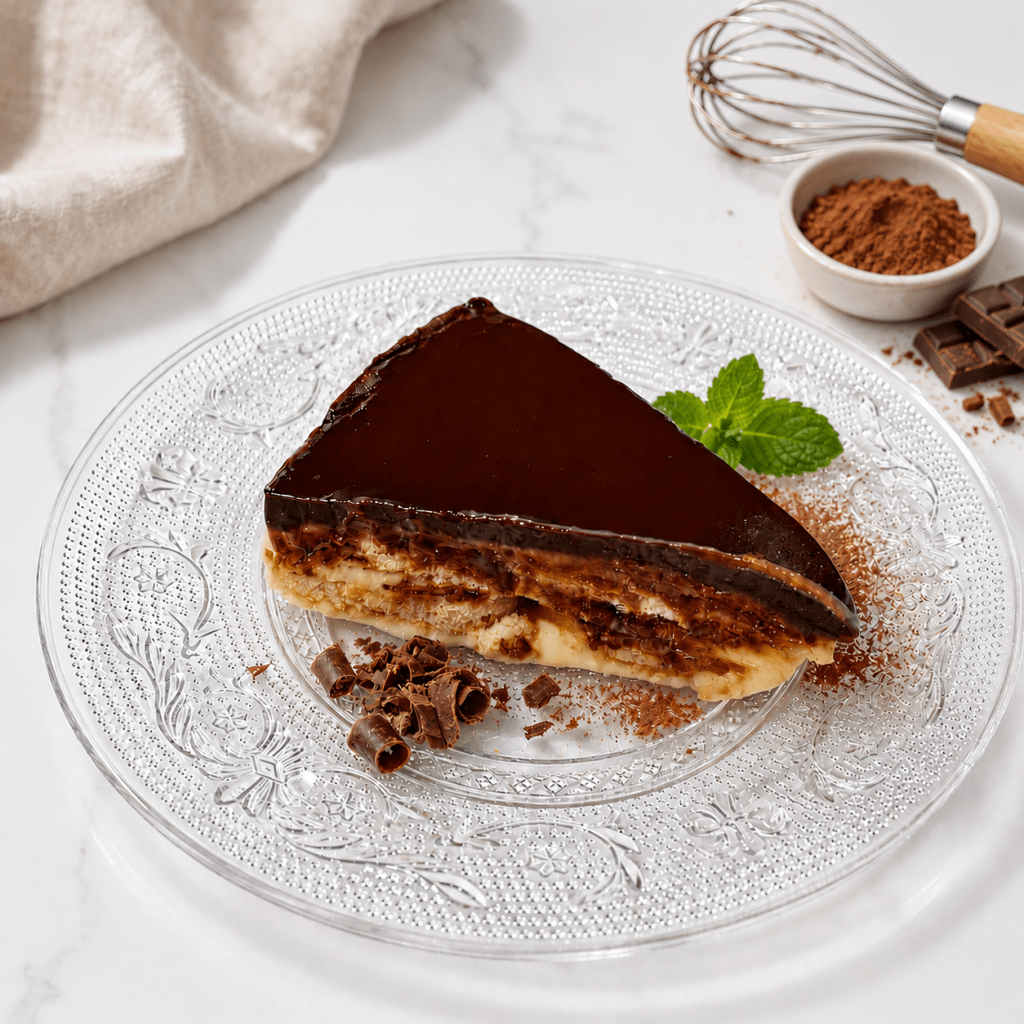
There is a reason I connect this particular memory to a Brazilian dessert, and it is not only that pavê is delicious, though it is. It is that food and memory operate by the same logic: both bypass the rational mind and arrive somewhere older and more honest. When I make pavê now, in my kitchen in California, I am not consciously thinking about a summer in Tehran and a bearded doctor conducting a football match with a cigarette somewhere in his near future. But something knows. Something in the act of making something with your hands, layering it carefully, waiting for it to set, knows.
Socrates died in 2011 at the age of 57. He had been warned, repeatedly and by people who should know, that his habits would shorten his life. He apparently received this information and made his peace with it. I think he would have found the idea of a longer and more careful life considerably less interesting than the one he had. I find it hard to argue with that, even while finding it sad.
The pavê, at least, will keep for three days in the refrigerator. Which is more than can be said for some of the best things.
Brazilian Pavê with Chocolate Glaze
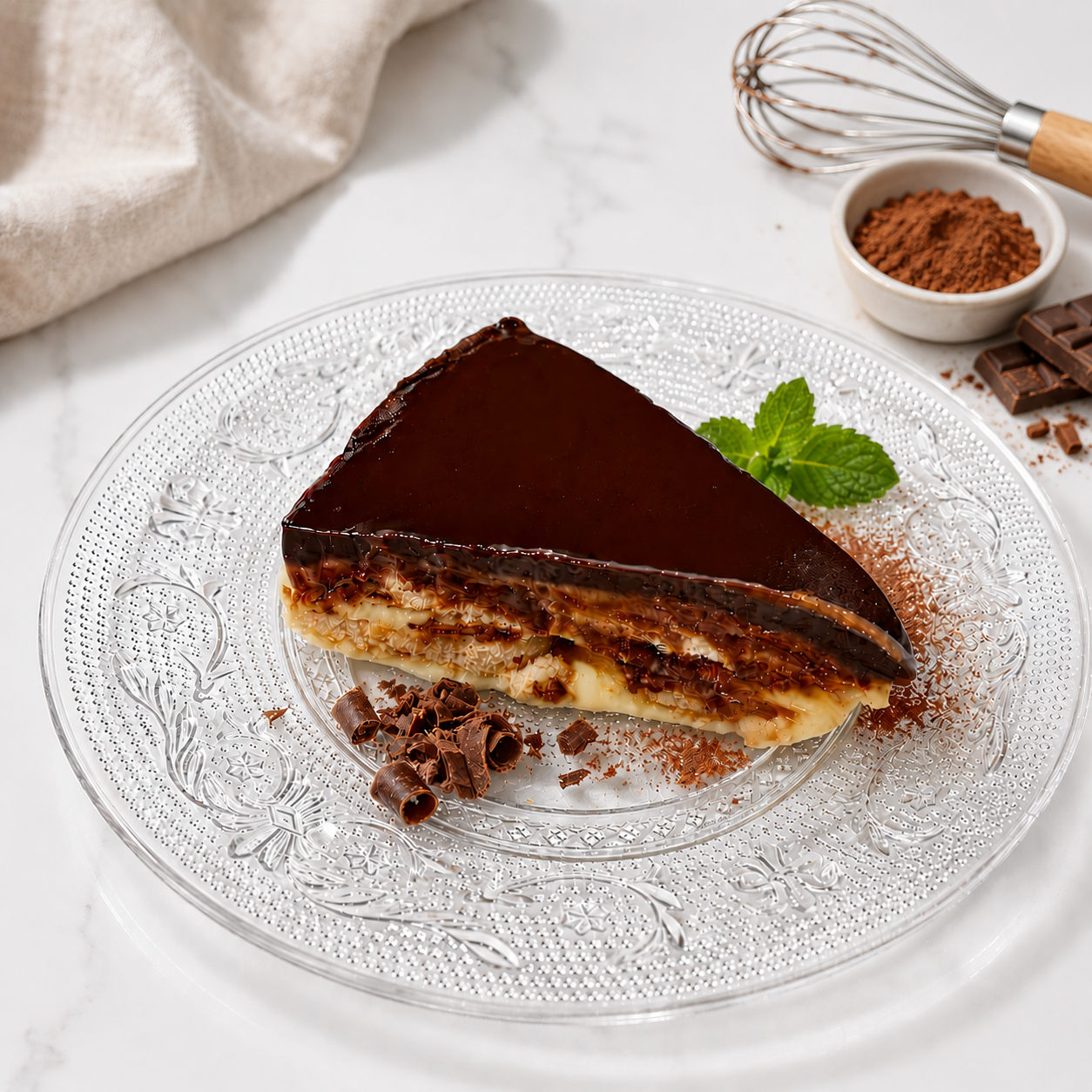
Pavê is Brazilian comfort food, which means it is not trying to impress you. It is trying to make you feel good, which is a more difficult thing to achieve and considerably more valuable. It needs time in the refrigerator to set properly, so make it the day before if you can.
Ingredients
- 400g condensed milk
- 3 tablespoons cornstarch
- 3 egg yolks
- 500ml whole milk
- 400g heavy cream, divided into two equal portions
- 1 tablespoon vanilla extract
- 180g ladyfinger biscuits
- 200g semisweet chocolate, chopped
- Extra chopped chocolate, to finish
Directions
- Cream:
- Put the condensed milk and cornstarch into a saucepan and whisk them together before any heat. Whisk in the egg yolks until smooth, then add the milk and stir to combine.
- Place over medium heat and stir continuously, paying attention to the base and corners, until the mixture thickens enough to coat the back of a spoon and hold a line. Off the heat, stir in half the heavy cream and the vanilla, and cool ten minutes before assembling.
- Spread a thin layer of cream across the bottom of a baking dish. Lay ladyfingers over the cream in a single even layer, then cover with more cream.
- Repeat until everything is used, finishing with a layer of cream on top. Refrigerate at least three hours.
- Melt the chocolate gently in a bain-marie until smooth. Off the heat, stir in the remaining heavy cream until glossy and pourable.
- Let it cool slightly so it thickens just enough to sit on top, then pour over the chilled pavê and tilt the dish to spread it to the edges. Refrigerate another hour, then scatter chopped chocolate over the top just before serving.
Assembly:
Chocolate glaze:
A note on the ladyfingers: they are doing more work here than they appear to be. Do not rush the chilling time. The transformation that happens between the biscuit going in and the pavê coming out requires patience, which is, now that I think about it, something Socrates would have understood perfectly.


Leave a Reply